Amirhosein Mohaddesi · C++/ROS2 Systems Architect (Ph.D.)

Scaling Multi-Robot Autonomy via ROS2 & Agentic Infrastructure.

South San Francisco, CA · UC Irvine CARL

flowchart TD A[Client Request] -->|HTTP POST| B(Cascade C++ Proxy) B --> C{16-Token WordPiece} C -->|Vectorized| D[INT8 ONNX Runtime] D -->|386-dim Logistic Reg.| E{Model Selector} E -->|Fast Route| F[Small LLM] E -->|Complex Route| G[Frontier LLM] F --> H(JSON Rewrite & Return) G --> H
About

What I bring to a team.

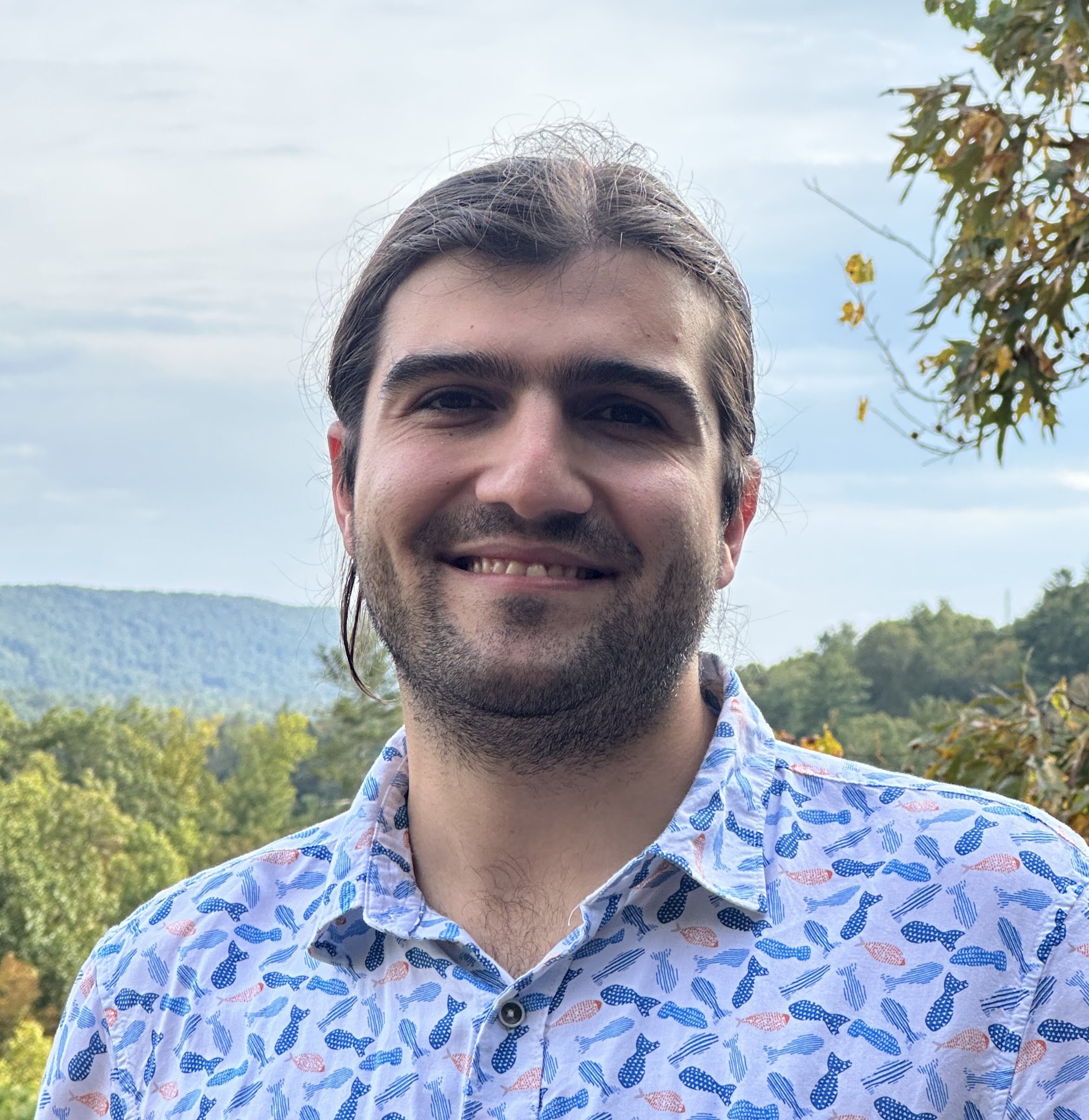
Profile Picture

C++/ROS2 systems architect with a Ph.D. from UC Irvine (CARL). I build fleet telemetry pipelines, deterministic safety interlocks, and policy-aware agent layers on ROS2 Humble—reliable autonomy infrastructure first.

Core competencies

  • Hard real-time stack: C++ telemetry nodes, 500Hz logging targets, Foxglove-ready bag pipelines.
  • Inference path: PyTorch training → ONNX export → bounded-latency fleet inference hooks.
  • Fleet ROS2: Nav2, SLAM Toolbox, map_merge, sim-to-real on ROS2 Humble.

Off-hours: hiking, camping, games, and time with my cat.

Profile

Selected skills

For detail, see my CV.

Agentic systems

  • LangGraph
  • LangChain
  • RAG
  • Policy validation
  • Tool-use orchestration

Systems & inference

  • C++
  • ONNX
  • PyTorch
  • Telemetry pipelines

Autonomy & robotics

  • ROS2 Humble
  • Nav2 / SLAM Toolbox
  • Webots / Gazebo
  • Multi-robot coordination
Projects

Engineering proof points.

Representative builds with full Problem–Solution–Outcome–Learning detail.

Cascade Router

Problem
Frontier-model hardcoding and reactive fallbacks waste 60–75% of inference spend. Standard Python/SaaS routers add 65–180 ms of latency, making them unusable for inline execution.
Learning
Sequence-length profiling drove the architecture. Distillation to INT8 ONNX and JSON weights made sub-5 ms VPC deployment a reality, proving that HTTP header hygiene matters as much as model selection.
Solution
Engineered a bare-metal C++ proxy routing pipeline: 16-token WordPiece → INT8 ONNX embedding → 386-dim logistic regression → upstream JSON rewrite to guarantee a <5 ms routing SLA.
Outcome
Achieved 4.6 ms mean routing latency (14× faster than Python baselines). Delivered 75% fast-model eligibility and 67.8% holdout accuracy across a 10K prompt corpus.
ROS2 Distributed Multi-Robot Control Stack

Problem
Multi-robot disaster response simulations require centralized mission orchestration without violating the decentralized safety constraints of individual agent navigation stacks.
Learning
Centralized map merging is inherently bounded by the publish rate of the slowest SLAM node. Scaling beyond the current architecture requires strict DDS-level QoS tuning and live telemetry instrumentation.
Solution
Engineered a dual-namespace ROS2 Humble and Gazebo environment to deploy decentralized Nav2 controllers and SLAM Toolbox instances, unified by an event-driven map-merging node and a LangGraph mission bridge.
Outcome
Successfully orchestrated concurrent multi-agent navigation missions via a 4-endpoint service bridge while maintaining stable asynchronous SLAM map updates across independent hardware namespaces (Nav2 controllers running at 20 Hz, SLAM instances publishing at 2 Hz). Integrated an OpenCV DNN YOLOv3 vision node (416×416 input).

Communication-Aware Multi-Robot Coordination

Problem
Homogeneous navigation policies caused redundant exploration and coordination failures as team size grew.
Learning
Strategy diversity plus explicit inter-robot messaging beats monolithic policies for scalable team autonomy.
Solution
Deployed inter-robot goal-sharing in ROS2 Humble with C++ obstacle-avoidance controllers and LangGraph planning hooks when classical policies stalled.
Outcome
Mixed-strategy teams improved exploration–efficiency trade-off vs. homogeneous fleets · published at SAB 2024 with measurable coverage gains.
Experience

Research, projects, and publications.

Problem–Solution–Outcome–Learning breakdowns from graduate research and engineering work.

Education

Ph.D. in Computer Science

2019–2025

University of California, Irvine

Donald Bren School of Information & Computer Sciences — robotics, ML infrastructure, and multi-agent systems with CARL.
GPA: 3.93/4

Bachelor's Degree

2014–2018

Sharif University of Technology

Hardware Engineering, Computer Engineering
GPA: 18.24/20

Research experience

ROS2 Multi-Robot Navigation Platform

Problem
Webots-only prototypes could not scale swarm size, sensor fidelity, or fleet telemetry needed to train navigation policies from human trajectory data.
Learning
Reliable autonomy infrastructure must precede learning—telemetry fidelity and modular ROS2 graph design determine whether imitation learning and agentic planners can ship to sim-to-real.
Solution
Architected ROS2 Humble simulation platform with SLAM Toolbox, Nav2, map_merge, and C++ high-rate state loggers into PyTorch-ready datasets.
Outcome
Maintained 500Hz telemetry logging · larger multi-agent experiments with quantified coverage and cooperation across navigation strategies.

Communication-Aware Multi-Robot Coordination

Problem
Homogeneous navigation policies caused redundant exploration and coordination failures as team size grew.
Learning
Strategy diversity plus explicit inter-robot messaging beats monolithic policies for scalable team autonomy.
Solution
Designed communication-aware goal sharing in ROS2 Humble with C++ deconfliction and LangGraph hooks for stalled classical policies.
Outcome
Mixed-strategy fleets reduced redundant exploration · strongest exploration–efficiency balance in disaster-response sim scenarios.

Strategy Diversity in Robot Teams

Problem
No empirical baseline existed for how heterogeneous navigation behaviors affect team-level efficiency in embodied multi-agent settings.
Learning
Heterogeneity is a controllable systems knob—treat strategy assignment as infrastructure, not an afterthought.
Solution
Built Webots testbed with Clearpath PR2 robots and a C++ obstacle-avoidance controller; swept Route, Survey, and Mixed strategy assignments.
Outcome
Published SAB 2024 · measurable coverage and coordination gains for heterogeneous strategy teams.

Autonomous Telepresence Navigation

Problem
Manual telepresence navigation imposed high cognitive load and degraded task performance during remote scavenger-hunt operations.
Learning
Autonomy wins when telemetry-backed UX metrics prove reduced operator cost, not when autonomy is added for its own sake.
Solution
Shipped real-time SLAM in ROS with C++ navigation core and PyQt operator GUI with cognitive-load instrumentation.
Outcome
Reduced operator cognitive load vs. manual teleop · IEEE ICDL 2024 human-study results on usability and efficiency.

Embedded ML Quantization

Problem
Full-precision spiking neural networks exceeded power budgets on embedded inference targets.
Learning
Quantization trade-offs are systems decisions—profile accuracy, power, and latency jointly before picking a bit width.
Solution
Implemented 8-bit quantized SNNs in PyTorch with custom quantization and ONNX export path for embedded targets.
Outcome
12%–18% energy reduction · 3%–7% accuracy loss on MNIST/CIFAR embedded benchmarks.

Selected projects

ROS2 Distributed Multi-Robot Control Stack

Problem
Single-process simulators could not stress-test distributed mapping under realistic ROS2 Humble timing.
Learning
Design telemetry and merge policies before scaling agent count—distributed graphs fail differently than monolithic sims.
Solution
Integrated SLAM Toolbox, Nav2, map_merge, and frontier exploration with DDP-ready PyTorch training hooks and C++ merge policies.
Outcome
Distributed ROS2 graph exposed race conditions pre-scale · reusable platform for collaborative mapping and fleet telemetry capture.

Publications

Peer-reviewed conference work from graduate research.

  • SAB 2024 Mohaddesi, S.A.; Hegarty, M.; Chrastil, E.R.; Krichmar, J.L. Benefit of Varying Navigation Strategies in Robot Teams. Proceedings of SAB 2024, Lecture Notes in Computer Science, Vol. 14993, pp. 63–77, Springer, 2024.
  • IEEE ICDL 2024 Pan, G.; Weiss, T.; Mohaddesi, S.A.; Szura, J.W.; Krichmar, J.L. Navigation and Cognitive Load in Telepresence Robots. IEEE ICDL 2024, pp. 1–6, 2024.
Contact

Let’s connect.

Open to AI systems and robotics engineering roles where infrastructure and autonomy matter. Email is best—include role, timing, and how you found me.

Ph.D. ICS, UC Irvine · CARL · AI Systems Architect

Location

South San Francisco, CA

Email for opportunities

CV available for download from the About section.